Proactive Signs

The 17 Predictive Index® Reference Profiles: Understand Each Personality Type in the Workplace

Analytical, social, steady, visionary: Discover the 17 profiles that encapsulate the major behavioral types in the workplace, and learn how to use them to inform your HR decisions.
Les 17 profils de référence Predictive Index® : guide complet - Predictive Index Reference Profiles
The Predictive Index® identifies 17 reference profiles that summarize the major behavioral types observed in the workplace. Used by more than 10,000 organizations worldwide, these profiles provide a quick framework for understanding each employee’s motivations, communication styles, and ways of working—without value judgments or rigid labels. This comprehensive guide presents the four main families of PI profiles, the 17 profiles in detail, and how to apply them to your hiring, management, and organizational decisions. Discover how to identify your profile and that of your teams with Proactive Signs, a certified Predictive Index® partner in France.

What is a Predictive Index® Reference Profile?

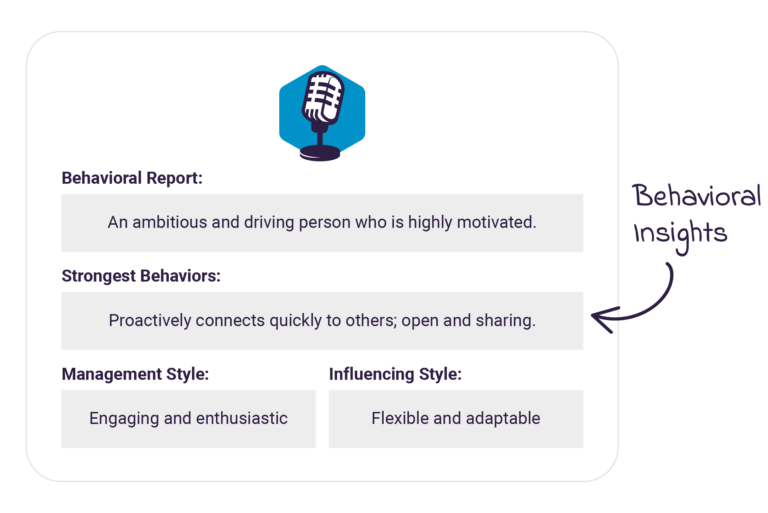
A Predictive Index® Reference Profile is the combined result of responses to the PI Behavioral Assessment®, the Predictive Index behavioral assessment. Each profile describes a typical behavioral pattern: the way a person approaches their work, makes decisions, interacts with others, and motivates themselves on a daily basis. The 17 profiles were developed based on more than 60 years of psychometric research applied to the workplace, supported by more than 500 scientific validity studies. They do not define what a person “is” in absolute terms, but provide a common language for discussing workplace behaviors and streamlining HR decisions.
💡 A PI profile is not a test with right or wrong answers. No single profile is inherently better than another. A high-performing company relies precisely on the diversity of profiles to fill all positions and assignments. Each person, based on their specific motivations, will be better suited for certain types of work. The PI profile sheds light on this fit; it does not judge it.

The 4 behavioral factors measured

Each Predictive Index® reference profile is built on a combination of four fundamental behavioral factors, also known as “behavioral drives” or motivations. These four factors are designated by the letters A, B, C, and D in PI analyses.
A
Dominance
Control · Decision · Affirmation

Measures the need to control one's environment, influence others, and achieve one's goals.

High score: An assertive, ambitious person who is comfortable taking risks, though sometimes self-centered.
B
Extraversion
Relationships · Communication · Influence

Measures the need for social interaction, connection, and communication with others.

High score: A sociable, persuasive, and energetic person in interactions.
C
Patience
Time · Stability · Consistency

Indicates a need for stability, consistency, and a regular pace in the work environment.

High score: A calm, steady person who values stability.
D
Formality
Rules · Structure · Details

Measures the need for compliance with established rules, standards, and structures.

High score: A thorough, methodical person who pays close attention to standards.

💡 The unique combination of these four factors allows us to assign an individual one of the 17 Predictive Index® reference profiles, which summarize the major behavioral types observed in the workplace.

The 17 Predictive Index® Reference Profiles in Detail

Each profile is presented below, along with its key characteristics and the professional settings in which it thrives.
🔬 Analytical Profiles Tasks · Data · Accuracy
The Analyst
Rigorous · Methodical · Data-driven

Gather all the facts before making a decision, and avoid relying on intuition.

Search Audit Management Accounting Strategic Analysis
Learn more →
The Specialist
Expert · Precise · Discreet

Has in-depth knowledge of a technical field and provides reliable expertise.

Engineering Accounting Technical Development Compliance
Learn more →
The Strategist
Visionary · Long-term · Strategic

Develops ambitious plans and anticipates future developments.

Executive Management Business Strategy Transformation
Learn more →
The Scholar
Curious · Analytical · Lifelong learner

Explores topics in depth and develops cross-functional expertise.

Advice Applied Research Innovation
Learn more →
Stable profiles Consistency · Reliability · Execution
The Operator
Methodical · Patient · Process-oriented

Has a thorough understanding of procedures and ensures consistent quality.
Production Logistic Administration
Learn more →
The Guardian
Reliable · Structured · Compliance-Focused

Ensures compliance with rules and the stability of processes.
Conformity Internal Audit Security Quality
Learn more →
The Artisan
Rigorous · Meticulous · Quality-oriented

Produces flawless work and refuses to settle for anything less than perfection.

Technical Design Quality Control High-end production
Learn more →
The Adapter
Versatile · Agile · Attentive

It adapts its operation to the context and serves as a bridge between styles.

Coordination Cross-functional Management Change Management Support
Learn more →
🚀 Visionary Profiles Leadership · Risk-Taking · Vision
The Captain
Leader · Motivating · Results-Oriented

Unites teams and leads efforts with authority and vision.

Operational Management Sales Management Unit Management
Learn more →
The Maverick
Independent · Bold · Unconventional

Think outside the box and come up with disruptive ideas.

Innovation Business development Transformative Projects
Learn more →
The venturer
Self-reliant · Risk-taker · Entrepreneurial

Is self-motivated and thrives in changing environments.

Entrepreneurship Business development Launch of Activities
Learn more →
The Individualist
Independent · Creative · Nonconformist

It offers original ideas and works best when given some leeway.

In-depth expertise Applied Research Strategic Consulting
Learn more →
The Controller
Results-oriented · Demanding · Organized

Leads teams with firmness and focuses on achieving objectives.
Operations Management Complex Project Restructuring
Learn more →

How to Identify Your Predictive Index® Profile?

To identify your reference profile, you must take the PI Behavioral Assessment®, the Predictive Index behavioral assessment. This questionnaire is taken online, takes 5 to 10 minutes, and requires no preparation: simply answer spontaneously and honestly to obtain a profile that accurately reflects your natural behavior. The analysis maps the individual against the four behavioral factors and assigns them one of 17 profiles. Interpretation by a certified consultant is essential for translating the results into concrete actions for recruitment, management, or team development.

How Can Companies Use PI Reference Profiles?

PI profiles are used in four major areas of human resources.

Predictive Hiring

PI profiles help identify candidates whose natural behaviors align with the job requirements. By comparing the candidate’s profile with the job’s behavioral target (PI Job Target®), the recruiter makes a more objective decision and reduces the risk of hiring the wrong person. The result: fewer failed hires, smoother onboarding, and a significant reduction in turnover.

Management and Team Engagement

A manager who understands the PI profiles of their employees naturally adapts their management style: more directive with an Analyst who expects clear instructions, more collaborative with an Altruist who needs dialogue, and more consistent with an Operator who values predictability. This leads to less tension, greater engagement, and better team performance.

Team Building

PI profiles make it possible to build balanced teams where complementary strengths combine to meet all of a project’s needs. This enables a leader to anticipate areas of friction and foster a cohesive team dynamic, whether to launch a product, enter a new market, or transform an organization.

Employee Development

Understanding one’s own PI profile helps each employee get to know themselves better, identify their comfort zones and areas for growth, and choose career paths aligned with their core motivations. Managers also use it as a powerful tool for development discussions and internal mobility.
Session de certification Predictive Index avec un groupe de participants RH

Learn How to Interpret Predictive Index® Profiles

Interpreting PI profiles requires a precise methodology. To fully leverage the 17 profiles in your HR decisions, the Predictive Index® certification enables HR directors, executives, and HR consultants to master the interpretation of the graphs, their application in recruitment, management, and team development, as well as the delivery of feedback sessions. Proactive Signs offers the Predictive Index® professional certification in five modules, with in-person sessions in Paris and Lyon, along with personalized support before, during, and after the training.

Frequently Asked Questions About Predictive Index® Reference Profiles

The Predictive Index® reference profile remains relatively stable over time because it reflects deep-seated motivations. However, it may change slightly depending on professional experiences (management roles, job demands, personal changes). It is recommended that you retake the PI Behavioral Assessment® every 3 to 5 years to capture any potential changes.

No. A Predictive Index® reference profile is a framework for understanding, not a label. It describes dominant behavioral tendencies, but each person retains the ability to adapt their behavior depending on the situation. The profile serves as a tool to aid HR decision-making—never as a judgment.

The DISC assesses only four behavioral traits (Dominance, Influence, Steadiness, and Compliance). The Predictive Index® assesses four behavioral factors AND one cognitive dimension (learning ability via the PI Cognitive Assessment®), making it a more comprehensive tool for strategic HR decisions. The 17 PI profiles also offer greater granularity than the four basic DISC profiles.

Technically, the PI Behavioral Assessment® is not a test in the strict sense: it does not produce a score based on right or wrong answers. It is an assessment that describes a person’s natural motivations and behaviors. For this reason, Predictive Index® recommends using the term “assessment” rather than “test.”

To determine your PI profile, you’ll take the online PI Behavioral Assessment®, which takes 5 to 10 minutes, at the invitation of a Predictive Index®-certified consultant. The results must then be interpreted by a certified consultant in order to be useful in a professional context.

Proactive Signs offers a Predictive Index® professional certification program consisting of five modules, delivered in in-person sessions in Paris and Lyon. This training is designed for HR directors, executives, and HR consultants who wish to master the interpretation of the 17 profiles and their practical application in recruitment, management, and team development.