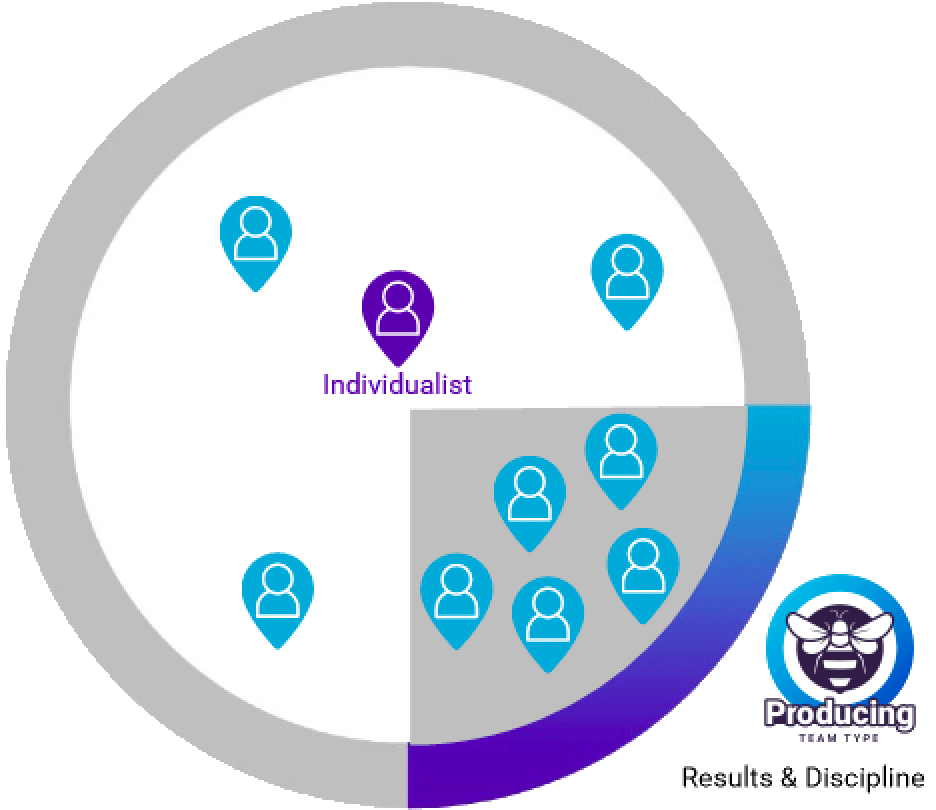
The Individualist is one of the most creative and independent Predictive Index® reference profiles. It combines assertive dominance with strong reserve, high patience and low formality, making it a non-conforming, analytical profile that drives innovation.
This article details the behavioural characteristics of the Individualist profile, its strengths, motivations, points to watch, the roles where it thrives, and management best practice. It is part of our series covering the 17 Predictive Index® reference profiles, decoded by Proactive Signs, certified Predictive Index® partner in France.
The Individualist at work…
The Individualist marches to the beat of their own drum and is always ready to take on a challenge. Confident, analytical and persistent, they have a strong-minded outlook and quickly turn ideas into reality. Naturally non-conforming, they have a genuine willingness to take risks when it is worthwhile. Once they have set a goal they consider worthy, they generally push hard to reach it. Eager to solve problems and move forward, they don’t like being slowed down by details. They can work steadily either in a collaborative or an independent setting.
Positioning of the Individualist profile on the 4 behavioural factors
The Individualist profile is characterised by a specific combination of the 4 behavioural factors measured by the PI Behavioral Assessment®. This behavioural signature reflects the person’s deep-seated motivations and their natural way of approaching work.
ADominance
Moderate to high
BExtraversion
Low
CPatience
High
DFormality
Low
LowHigh
Factor A · Dominance: Moderate to high
The Individualist shows moderate-to-high dominance, a marker of genuine independence of mind and confidence in their own convictions. They express their ideas assertively and are generally not discouraged by criticism or failure. This dominance is expressed more through intellectual assertiveness and autonomy than through team leadership.
Factor B · Extraversion: Low
The Individualist shows low extraversion: they are reserved, introspective and reflective. They draw their energy from in-depth work and problem-solving rather than intense social interaction. They communicate in a measured way and prefer autonomy to highly collective environments.
Factor C · Patience: High
The Individualist shows high patience, reflecting an ability to work steadily and consistently over time. They can focus at length on a complex problem without becoming scattered, and pursue a goal with persistence. This patience combines with their creativity to produce well-rounded solutions.
Factor D · Formality: Low
The Individualist shows low formality, meaning they are not inclined to conform to established rules and structures. They improvise, think outside the box and don’t like being slowed down by details or procedures. It is this factor that gives the Individualist profile its creative, non-conforming signature.
Key strengths of the Individualist profile
The Individualist’s major strengths are creativity, independence, persistence and the ability to challenge the status quo.
This is a profile that innovates: they bring original ideas, act on new concepts and are not easily discouraged by criticism or failure. Their strong convictions and results orientation make them a driver of new initiatives, capable of pushing an organisation forward by moving established boundaries.
Points to watch for the Individualist profile
The Individualist’s points to watch relate to their independence and low appetite for structure. Their resistance to process and preference for independent work can create friction in highly structured environments. They can be casual about follow-up and detail, preferring to focus on the bigger picture. Their strong convictions can make them difficult to sway. Finally, their reserve can make them less visible in highly collaborative organisations.
How to manage an Individualist profile effectively?
A manager who wants to get the best from the Individualist profile must give them autonomy and space to execute their ideas. They respond better to results-based expectations than to strict processes. Micromanagement should be avoided in favour of clear goals, while leaving flexibility on how to reach them.
💡 The right management move: encouraging their ideas while aligning them with company priorities is key to keeping them engaged.
How to communicate with an Individualist profile?
To communicate effectively with an Individualist profile, respect their need for autonomy and value their ideas. They appreciate substantive discussion, creative latitude and people who take their convictions seriously. Overly rigid instructions, excessive control or a focus on follow-up detail demotivate them. It is best to set a clear direction and leave them free to find their own way there.
Roles where the Individualist profile thrives
The Individualist profile thrives in roles that call for creativity, analysis and autonomy. They excel in research and innovation, strategic consulting, in-depth expertise, design, new product development or complex problem-solving roles. They are particularly suited to environments that value original thinking and leave room to explore unconventional solutions.
Complementary Predictive Index® profiles in a team
The Individualist profile benefits from being paired in a team with profiles that bring the execution structure and relational dimension they do not naturally prioritise. The Operator or the Guardian ensure the follow-through and consistency the Individualist tends to overlook. The Promoter or the Persuader carry their ideas to stakeholders and build buy-in. The Captain turns their concepts into decisions and rapid action. This complementarity allows the Individualist to focus on innovation while relying on profiles that secure execution and relationships.
The Operator
Ensures the follow-through and consistency the Individualist tends to overlook.
The Guardian
Secures execution and keeps procedures on track.
The Promoter
Carries the Individualist’s ideas to stakeholders and builds buy-in.
Frequently asked questions about the Individualist profile
The Individualist can be an effective manager in innovation or expertise contexts, where their autonomy and creativity are valued. They are generally less comfortable managing large, highly structured teams, which demand consistent follow-up and strong relational investment.
The best-suited roles for an Individualist profile are those that call for creativity and autonomy: research and innovation, strategic consulting, in-depth expertise, design, new product development or complex problem-solving.
No. The two profiles share an independent, non-conforming streak, but their signatures differ. The Individualist combines low extraversion with high patience, favouring sustained, reflective work, while the Maverick combines high extraversion with lower patience, favouring fast-paced, socially driven action.
We use cookies to ensure that we give you the best experience on our website. If you continue to use this site we will assume that you are happy with it.