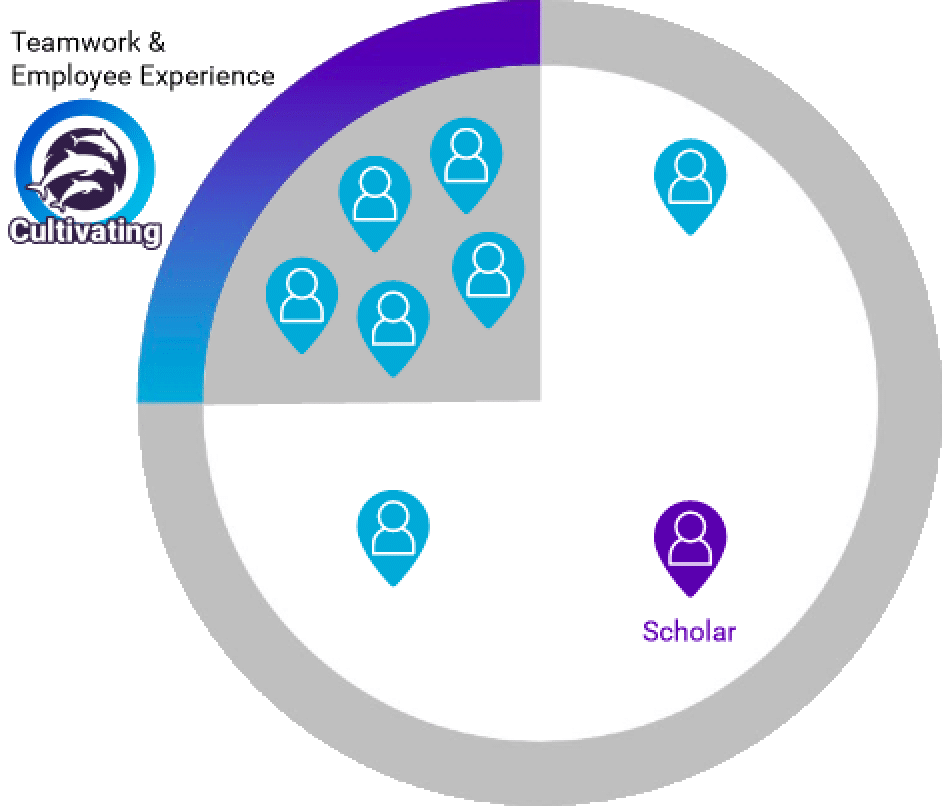
The Scholar is one of the most rigorous and analytical Predictive Index® reference profiles. It combines assertive dominance with strong reserve, high patience and high formality, making it an expert, methodical profile deeply committed to quality and structure.
This article details the behavioural characteristics of the Scholar profile, its strengths, motivations, points to watch, the roles where it thrives, and management best practice. It is part of our series covering the 17 Predictive Index® reference profiles, decoded by Proactive Signs, certified Predictive Index® partner in France.
The Scholar at work…
The Scholar is a thoughtful, introspective, data-driven profile. They like to have all the information and facts before acting: give them the necessary detail and a little time to analyse it, and they will produce high-quality work. Naturally reserved, they draw their energy from in-depth, focused work rather than social interaction. They value structure, rules and precision, and seek to build solid, lasting expertise in their field.
Positioning of the Scholar profile on the 4 behavioural factors
The Scholar profile is characterised by a specific combination of the 4 behavioural factors measured by the PI Behavioral Assessment®. This behavioural signature reflects the person’s deep-seated motivations and their natural way of approaching work.
ADominance
High
BExtraversion
Low
CPatience
High
DFormality
High
LowHigh
Factor A · Dominance: High
The Scholar shows high dominance, reflecting genuine confidence in their own judgement and an ability to defend their conclusions. This assertiveness is expressed less through social leadership than through intellectual firmness: the Scholar holds their position when they believe they are right, based on their analysis and data.
Factor B · Extraversion: Low
The Scholar shows low extraversion, a marker of a very reserved, discreet, reflective temperament. They prefer working independently, substantive discussion and structured written communication to frequent social interaction. They are at ease in calm, focused settings, less so in group facilitation or networking.
Factor C · Patience: High
The Scholar shows high patience, reflecting a need for stability, consistency and a measured pace. They like to take the time to go into depth, do not act hastily, and favour predictable environments. This patience allows them to carry out long, rigorous analyses without being thrown off by urgency.
Factor D · Formality: High
The Scholar shows high formality, meaning they place great importance on rules, processes, precision and compliance with standards. They document their work carefully, follow procedures, and expect the same level of rigour from their environment. It is this factor that gives the Scholar profile its signature as a methodical expert.
Key strengths of the Scholar profile
The Scholar’s major strengths are their data-driven approach, introspection, calm reflective capacity and organisational skills.
This is a profile that produces highly reliable work, grounded in analysis and verification. They excel in assignments requiring depth, rigour and technical expertise, and their combination of high patience and formality makes them a guarantor of quality and consistency.
Points to watch for the Scholar profile
The Scholar’s points to watch relate to their caution and need for certainty. They can become anxious at the prospect of open disagreement and seek to avoid conflict. They are often uncomfortable in new or changing environments that disrupt their bearings. They may hesitate to act on a new idea until they have all the data, which can slow decision-making. Finally, like many expert profiles, they sometimes find it hard to delegate work they want to carry out themselves with precision.
How to manage a Scholar profile effectively?
A manager who wants to get the best from the Scholar profile must provide the detail and information they need, give them time to analyse, and offer a stable, structured environment. This profile becomes demotivated by sudden unexplained changes, pressure for immediate action, or a lack of clarity about expectations.
💡 The right management move: an effective manager secures their working framework, recognises their expertise, and avoids putting them in difficulty by asking for a position too quickly.
How to communicate with a Scholar profile?
To communicate effectively with a Scholar profile, favour precision, structure and the written word. They appreciate being given information in advance, being given time to analyse it, and having arguments backed by facts. Requests for an immediate response, vague exchanges or decisions justified by intuition do not sit well with them. It is best to send them a detailed note rather than an impromptu verbal request.
Roles where the Scholar profile thrives
The Scholar profile thrives in roles that call for expertise, analysis and rigour. They excel in research and development, technical or scientific expertise, data analysis, quality control, compliance, engineering or specialist consulting roles. They are particularly suited to environments where precision and depth of analysis are key success factors, and where they can work independently on complex subjects.
Complementary Predictive Index® profiles in a team
The Scholar profile benefits from being paired in a team with profiles that bring the relational drive and fast-execution energy they do not naturally prioritise. The Persuader or the Promoter carry their analyses to stakeholders and build buy-in. The Captain or the Strategist turn their recommendations into decisions and action. The Adapter bridges the gap between their expertise and the rest of the team. This complementarity allows the Scholar to focus on analytical depth while relying on profiles that bring relationship-building and execution.
The Persuader
Carries the Scholar’s analyses to stakeholders and builds buy-in.
The Promoter
Translates expertise into an engaging message for the team.
The Captain
Turns recommendations into decisions and action.
Frequently asked questions about the Scholar profile
The Scholar is more of an expert profile than a team manager in the traditional sense. That said, they can excel in managing expertise or technical teams, where their rigour and depth are valued. They are less comfortable in highly visible communication roles or roles requiring frequent, fast decisions.
The best-suited roles for a Scholar profile are those that call for analysis and expertise: research and development, technical or scientific expertise, data analysis, quality control, compliance, engineering or specialist consulting.
A Scholar profile can be recognised by their data-driven approach, caution, need for structure, and pursuit of quality and expertise. Only the PI Behavioral Assessment®, however, can reliably assign a profile.
We use cookies to ensure that we give you the best experience on our website. If you continue to use this site we will assume that you are happy with it.