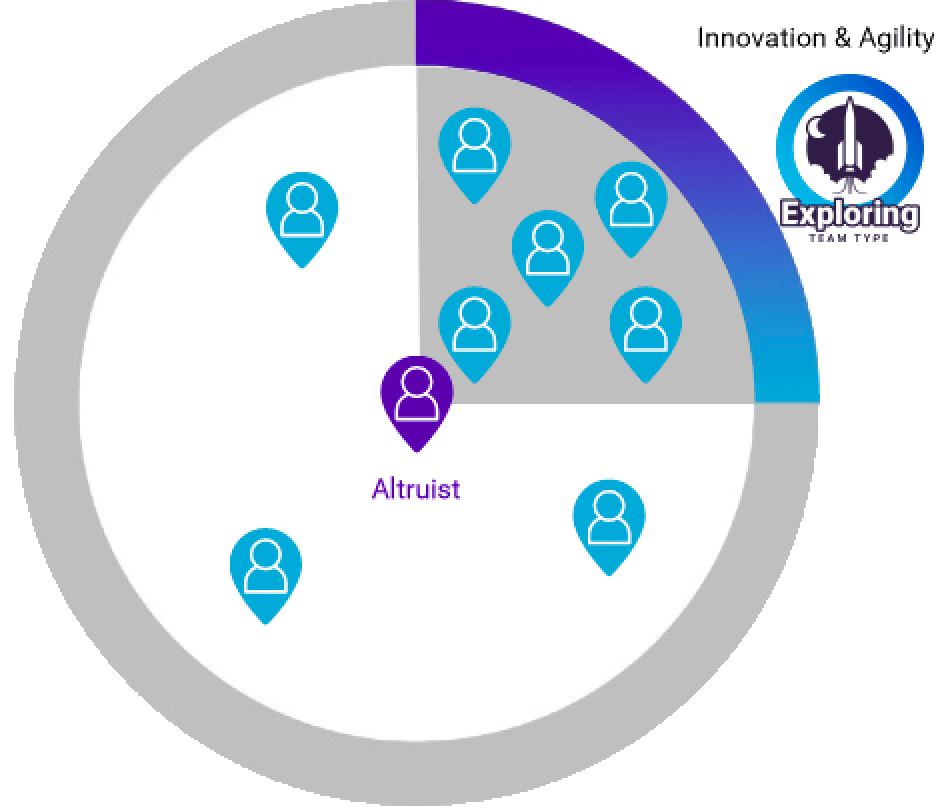
The Altruist is one of the warmest and most people-oriented reference profiles in the Predictive Index®. As part of the social profile family, it combines marked extraversion with high reliability, making it a naturally caring, cooperative, and committed profile dedicated to serving the group. This article details the behavioral characteristics of the Altruist profile, its strengths, areas for attention, the roles in which it thrives, and best practices for managers.
The Altruist is a warm, empathetic and deeply people-oriented profile. They derive genuine satisfaction from helping their colleagues, clients, or team succeed.
Naturally inclined toward cooperation, they avoid conflict, seek consensus-based solutions, and foster smooth relationships. They appreciate stable environments, close-knit teams, and assignments that give them a sense of contributing to the well-being of others.
They are reliable, consistent, and committed to their responsibilities, making them a particularly valuable team member in environments where consistent relationships are key.
The Altruist Profile's Positioning Across the 4 Behavioral Factors
The Altruistic profile is characterized by a specific combination of the four behavioral factors measured by the PI Behavioral Assessment®. This behavioral signature remains stable over time and reflects the individual’s deep-seated motivations.
ADominance
Low
BExtraversion
High
CPatience
Low
DFormality
High
FaibleÉlevée
Factor A · Dominance: low
The Altruist exhibits low dominance, which reflects a preference for cooperation, consensus, and humility. He is not particularly inclined toward taking control or asserting himself directly.
They prefer to persuade through relationships and active listening rather than through authority. This low dominance may make them more reserved when taking a stand, but it makes them an excellent facilitator.
Factor B · Extraversion: high
The Altruist exhibits high levels of extraversion, which indicates a strong need for social interaction, communication, and connection with others.
They draw energy from human contact, enjoy working in teams, and feel naturally at ease in environments where interpersonal relationships are valued. They communicate readily, listen actively, and know how to put others at ease.
Factor C · Patience: low
The Altruist works at a faster-than-average pace but pays close attention to detail and handles tasks quickly and accurately.
However, he is too impatient to devote himself primarily to routine and meticulous tasks.
Factor D · Formality: high
The Altruist exhibits a high degree of formality, which means they place importance on rules, norms, and established structures.
They follow procedures, honor their commitments, and prioritize precision in their work. This adherence to rules is accompanied by a strong sense of duty and a commitment to reliability toward themselves and others.
The Key Strengths of the Altruist Profile
The key strengths of the Altruist profile are
empathy
reliability
cooperation
a sense of service
This is a profile that focuses on caring for colleagues, clients, processes, and commitments. Their combination of high extraversion and high precision makes them an excellent team facilitator, capable of smoothing out relationships, easing tensions, and ensuring consistent relationships over time.
They are particularly valuable in service, support, and coordination roles.
Points to Watch for in the Altruistic Profile
Key considerations for the Altruist profile stem from their strong focus on harmony.
Their desire for consensus can make them uncomfortable in situations involving open conflict, tough negotiations, or unpopular decision-making.
Their impatience can hinder their ability to carry out routine and meticulous tasks over the long term.
Their high regard for formality can make them demanding when others fail to follow the rules.
Finally, their service-oriented nature can lead them to neglect their own needs and overinvest in helping others at the expense of their own priorities.
How can you effectively manage an Altruistic profile?
A manager who wants to get the most out of an Altruistic employee should provide a stable environment, build trusting relationships, and offer sincere recognition of the employee’s contributions. This profile becomes demotivated when faced with repeated interpersonal conflicts, routine tasks, or a directive and impersonal management style. Feedback should be given with kindness and focus on a constructive approach.
💡 The Right Managerial Approach: Take the time to check in regularly, clearly express appreciation, provide a predictable framework, and ensure a smooth transition through advance communication.
How do I communicate with an Altruist profile?
To communicate effectively with an Altruist, focus on warmth, availability, and attention to the relationship.
Cold, purely transactional, or directly critical messages can hurt their feelings. A personalized greeting, a few words about the context of the relationship, or a question about how they’re feeling before getting to the heart of the matter can make a real difference.
The Altruist appreciates it when you take the time to explain, listen to their point of view, and consider their concerns before making a decision. Avoid abrupt challenges and unilateral decisions made without consultation.
Jobs where the Altruistic profile thrives
The Altruistic profile thrives in roles that draw on interpersonal skills and a commitment to service.
This profile excels in roles such as human resources manager, customer relationship manager, wealth management advisor, support team manager, educational coordinator, customer-focused quality manager, or people-centered change management consultant. This profile is particularly well-suited to organizations where stable relationships are a key driver of performance and where employees can build lasting connections with those they interact with.
Complementary Predictive Index® Profiles Within a Team
The Altruist profile benefits from being paired on a team with profiles that provide the decision-making structure and the ability to make decisions—qualities that the Altruist does not naturally prioritize.
The Analyst
Provides analytical rigor and data-driven decision-making.
The Captain
Turn recommendations into decisions and concrete actions.
The Venturer
Adds energy and speed to the execution phases.
Frequently Asked Questions About the Altruist Role
Yes, particularly in management roles focused on people development, human-centered change management, or department management. He may be less comfortable in management roles focused on hard performance metrics, where he must make quick decisions or enforce unpopular ones.
The careers best suited to the Altruistic profile are those that involve building relationships, active listening, and providing service: human resources, customer relations, consulting, coaching, coordination, managing support teams, training, or cross-functional coordination roles.
Yes, particularly in long-term relationship-based sales, managing key accounts, and building customer loyalty. He is generally less comfortable with short-term sales, cold calling, or tough negotiations, which require skills better suited to the Persuasive or Captain profiles.
We use cookies to ensure that we give you the best experience on our website. If you continue to use this site we will assume that you are happy with it.