
The Predictive Index® is a behavioral and cognitive assessment methodology created in 1955 in the United States by Arnold S. Daniels.
Used today by more than 10,000 companies worldwide including a growing number in France the Predictive Index enables executives, HR directors, and managers to make informed decisions regarding recruitment, management, and organizational structure.
Rather than relying on intuition, the PI draws on scientific data validated by the APA, SIOP, and ITC to objectively identify a person’s motivations, behaviors, and cognitive abilities.
In this comprehensive guide, discover what the Predictive Index is, how it works, the 17 reference profiles, and how to use it in your company.
Predictive Index®: Definition and Origin
A methodology that originated in the United States in 1955
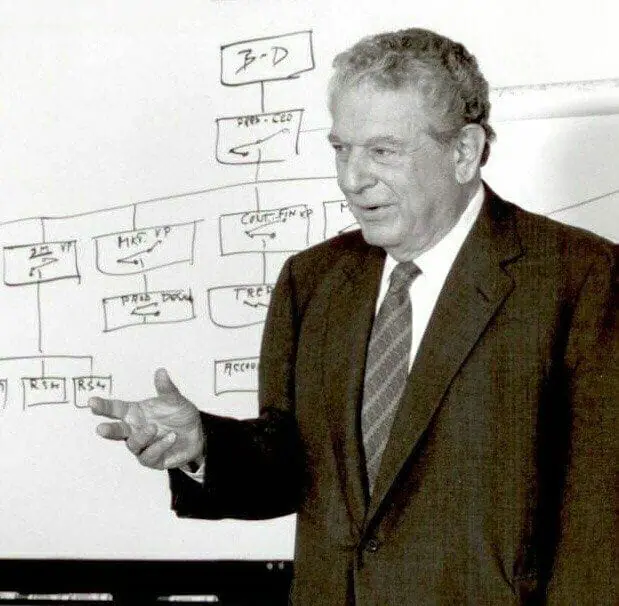
The Predictive Index was born from the insight of Arnold S. Daniels, a young bomber navigator during World War II. Having observed that the highest-performing crews were not necessarily made up of the most qualified soldiers on paper, but rather of individuals whose behaviors complemented one another, he decided after the war to develop a scientific tool to objectively measure behavioral patterns in the workplace.
In 1955, he published the PI Behavioral Assessment, the first cornerstone of the Predictive Index. The cognitive assessment (PI Cognitive Assessment) was added to the methodology a few years later. Since then, the PI has been continuously enhanced by research in psychometrics and adopted by the world’s leading companies.
The Science Behind the Predictive Index
The Predictive Index is not your typical personality test. It is a rigorous psychometric tool whose scientific validity has been confirmed by:
✅ More than 500 independent scientific studies
✅ 60 years of applied research in the workplace
✅ Compliance with the standards of the APA (American Psychological Association), the SIOP (Society for Industrial and Organizational Psychology), and the ITC (International Test Commission)
This scientific rigor sets the Predictive Index apart from consumer-grade tools and explains why it is adopted by companies with the highest standards for talent management.
What is the Predictive Index used for?
The Predictive Index is an HR decision-making tool that covers the key areas of talent optimization.
Predictive Hiring
Management and Team Engagement
Team Organization and Structure
How does the Predictive Index work?
The Predictive Index is based on two complementary assessments, available online and designed to be completed in less than 18 minutes total.
PI Behavioral Assessment
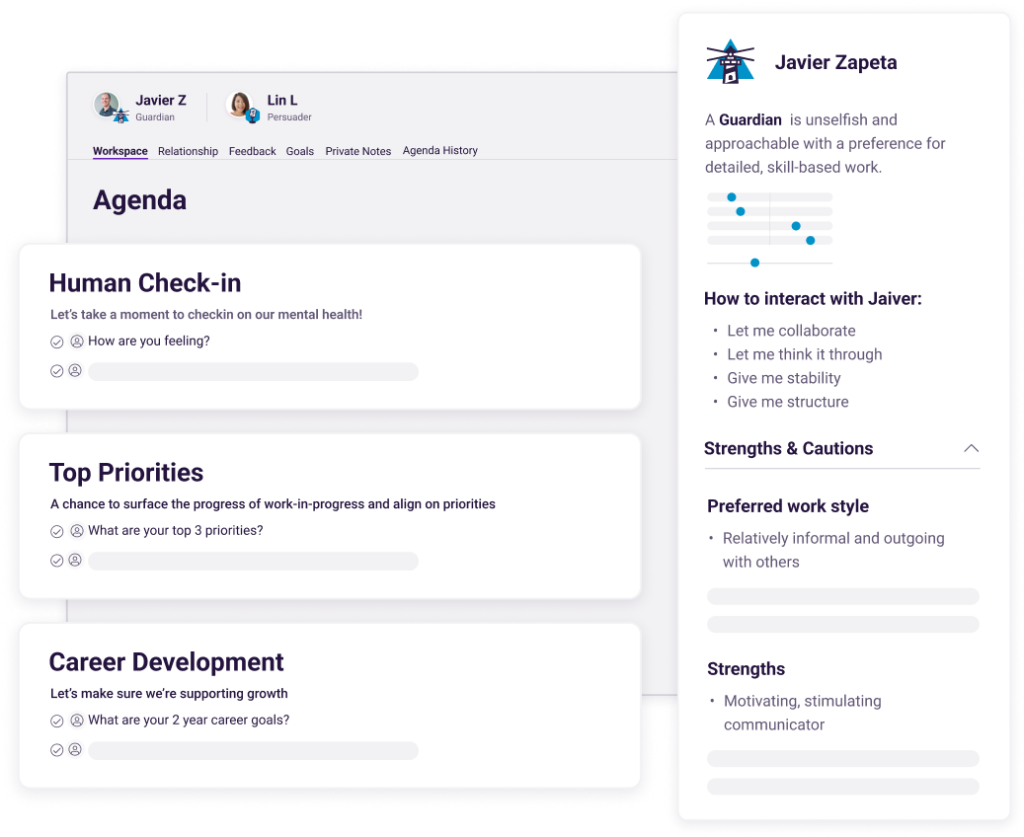
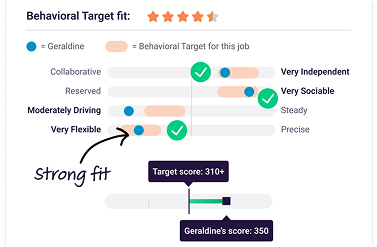
The Predictive Index Behavioral Assessment is a multiple-choice questionnaire designed to identify a person’s natural behaviors in a professional setting.
The candidate selects, from two lists of adjectives, those that best describe how others expect them to behave at work and how they see themselves. This dual approach captures both adopted behaviors and natural behaviors.
PI Cognitive Assessment
The Predictive Index’s cognitive assessment complements the profile by measuring an individual’s cognitive preferences. Consisting of 50 verbal, numerical, and abstract questions to be completed in 12 minutes or less, it reflects cognitive preferences and the speed at which an individual adapts to new situations.
This dimension is particularly important for roles that require extensive ongoing learning (management, technology, consulting).
Predictive Index vs. DISC vs. MBTI: What Are the Differences?
The Predictive Index is often compared to other behavioral assessment tools. Here are the key differences:
(Dominance, Influence, Stability, Conformity)
(typologie Jung)
+ cognitive dimension
Whereas DISC simply describes and MBTI categorizes, the Predictive Index is designed to predict how well a person is suited for a particular role. This explains its widespread adoption by companies with high performance expectations.
Predictive Index and the GDPR: What You Need to Know in France
The use of the Predictive Index in France is subject to the General Data Protection Regulation (GDPR), which strictly regulates the processing of psychometric data (considered sensitive). GDPR best practices applicable to the Predictive Index include:
The 5 Best Practices for GDPR Compliance
- Informed consent from the candidate or employee prior to the assignment
- A specific purpose (recruiting for a particular position, managerial coaching, team building, etc.)
- A limited retention period (generally a maximum of 2 years, to be adjusted based on the purpose)
- The right to access, correct, and delete data
- Prior information regarding the identity of the data controller and the recipients of the results
How Companies Use PI
The Predictive Index is suitable for organizations of all sizes. Here are the main scenarios for its use.Growing Small and Medium-Sized Enterprises
Medium-Sized Enterprises in Transition
Major Corporations
In each of these contexts, the Predictive Index is never used on its own: it is part of a comprehensive HR approach and complements other factors (experience, technical skills, motivation, values).
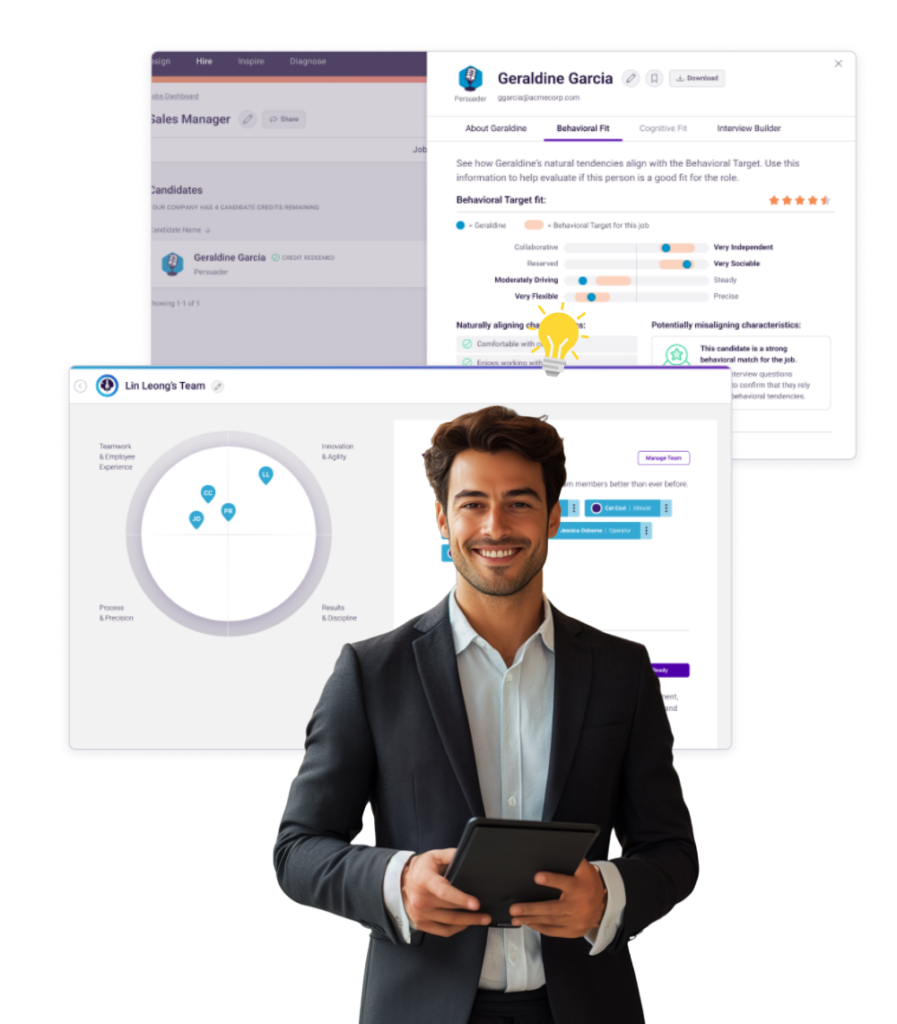
How can I get trained on the Predictive Index® in France?
To get the most out of the Predictive Index, executives and HR directors can complete the Predictive Index® Professional Certification program. This five-module training course teaches participants how to interpret PI profiles, use the tool in recruiting, management, and organizational development, and facilitate individual or group debriefings.
Proactive Signs offers in-person Predictive Index certification sessions in Paris and Lyon, with personalized support before, during, and after the training.
How do I take the Predictive Index test?
The Predictive Index test is taken online in less than 10 minutes via a personalized link provided by a certified partner. No preparation is necessary simply answer spontaneously and honestly.
To take the PI test under optimal conditions, contact Proactive Signs: we’ll arrange for you to take the test, interpret the results, and provide feedback with a certified consultant.
Why Choose Proactive Signs as a Predictive Index Partner?
Proactive Signs is a major certified partner of The Predictive Index® and a leader in France. Our team supports executives, HR directors, and managers throughout the entire PI lifecycle.
- Assessment of Your Needs and Scope Definition for Using the Predictive Index in Your Company
- Test administration and interpretation by a certified consultant
- Individual and Collective Restitution
- Training and Certification for Your Teams
- GDPR Compliance and Best Practices
Our sessions are held primarily in Paris, Lyon, and Toulouse, but we offer our services throughout France and around the world in French, English, and Italian.
Frequently Asked Questions About the Predictive Index
The Predictive Index® is a behavioral and cognitive assessment methodology developed in 1955. It helps identify an individual’s motivations and abilities to support more reliable hiring, management, and organizational decisions within a company.
Yes. The PI complies with the standards of the APA, SIOP, and ITC. Its validity is supported by more than 500 scientific studies and 60 years of psychometric research applied to the workplace.
Any French company can use The Predictive Index® provided it works with a certified partner. Proactive Signs is a certified partner of The Predictive Index® and supports HR directors, executives, and managers in France.
The cost of the Predictive Index depends on the number of users, the scope (recruiting, management, organization), and the level of support you need. Request a personalized quote from a certified partner.
The DISC assesses only 4 behavioral traits. The Predictive Index assesses 4 behavioral factors AND a cognitive dimension (learning ability), making it a more comprehensive tool for strategic HR decisions.
Proactive Signs offers a five-module Predictive Index® professional certification program, with in-person sessions in Paris and Lyon, for HR directors, executives, and HR consultants.
No. The PI is a decision-making tool that complements the interview and resume analysis. It provides an objective perspective on behavior and cognitive abilities, but it never replaces the recruiter’s human judgment.