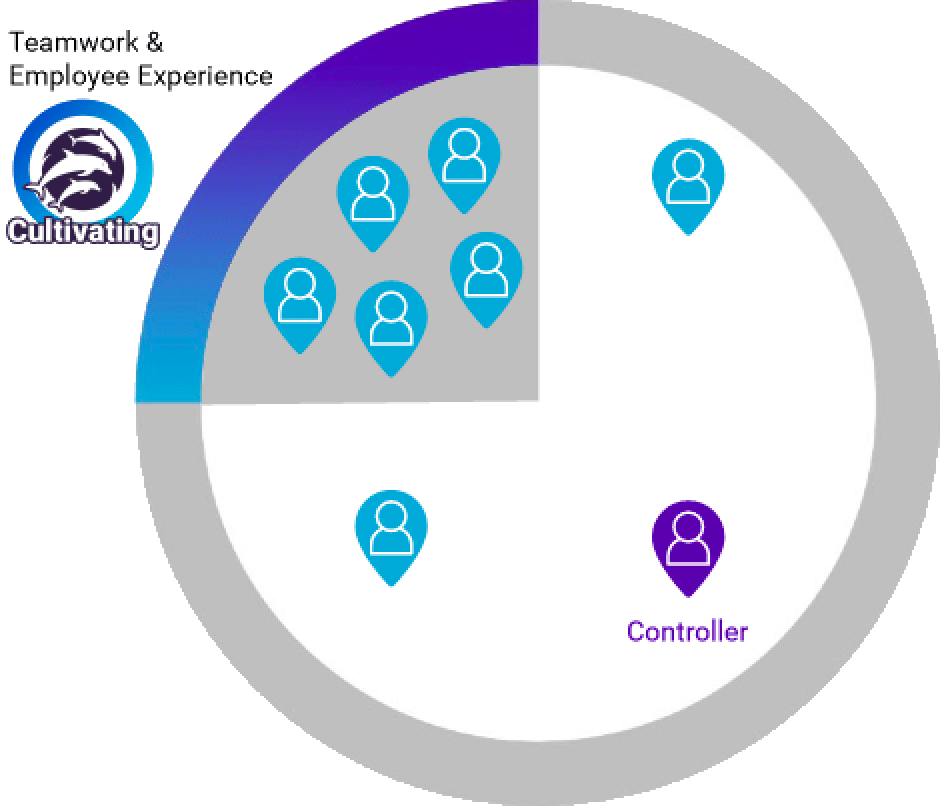
The Controller is one of the most rigorous and reliable Predictive Index® reference profiles. It combines assertive dominance with a strong impatience to act and high formality, making it an independent, detail-oriented profile particularly committed to structure and quality of execution.
This article details the behavioural characteristics of the Controller profile, its strengths, motivations, points to watch, the roles where it thrives, and management best practice. It is part of our series covering the 17 Predictive Index® reference profiles, decoded by Proactive Signs, certified Predictive Index® partner in France.
The Controller at work…
The Controller is an independent, conscientious and deeply reliable profile. They like to work independently, at a strong pace, within a structured framework where processes are clear. Loyal and detail-oriented, they naturally anticipate problems and make sure work is done properly the first time. They combine high quality standards with a genuine ability to move quickly, making them a rigorous, dependable pillar of execution.
Positioning of the Controller profile on the 4 behavioural factors
The Controller profile is characterised by a specific combination of the 4 behavioural factors measured by the PI Behavioral Assessment®. This behavioural signature reflects the person’s deep-seated motivations and their natural way of approaching work.
ADominance
Moderate to high
BExtraversion
Low to moderate
CPatience
Low
DFormality
High
LowHigh
Factor A · Dominance: Moderate to high
The Controller shows moderate-to-high dominance, a marker of genuine independence and an ability to work autonomously. They like to master their own remit and make the decisions within their responsibility, without needing close supervision. This autonomy is expressed more in mastery of their own work than in team leadership.
Factor B · Extraversion: Low to moderate
The Controller shows fairly reserved extraversion: they are measured, thoughtful and focused on their tasks rather than social activity. They communicate factually and directly, favouring efficiency and precision over the relational dimension.
Factor C · Patience: Low
The Controller shows low patience, reflecting a need for action, fast pace and tangible progress. They cope poorly with slowness and stagnation, and like to see things move forward. This impatience, combined with their attention to detail, drives them to do things quickly but well.
Factor D · Formality: High
The Controller shows high formality, meaning they place great importance on rules, processes and compliance with standards. They are extremely thorough, structured and attentive to detail. It is this factor, combined with their autonomy, that gives the Controller profile its signature as a rigorous guardian of quality.
Key strengths of the Controller profile
The Controller’s major strengths are loyalty, professional conscientiousness, attention to detail and the ability to anticipate problems.
This is a profile you can count on: they do the work properly, follow procedures and spot risks before they become crises. Their combination of autonomy, fast pace and high formality makes them an excellent guarantor of execution quality in demanding environments.
Points to watch for the Controller profile
The Controller’s points to watch relate to their demanding nature and need for control. They can be sceptical of new people until they have proven themselves. They often find it hard to delegate authority, preferring to keep control of what they are responsible for. They can be resistant to change when it disrupts processes they consider effective. Finally, their focus on results and detail can make them seem abrupt or lacking warmth in their exchanges.
How to manage a Controller profile effectively?
A manager who wants to get the best from the Controller profile must give them autonomy within a clear remit, a structured framework and recognition for their reliability. This profile becomes demotivated by disorganisation, constant unjustified changes or micromanagement. An effective manager gives them precise ground rules, respects their need for control and involves them early in changes to overcome their reluctance.
💡 The right management move: feedback should be factual and recognise the quality of their work.
How to communicate with a Controller profile?
To communicate effectively with a Controller profile, be precise, structured and factual. They appreciate clear instructions, well-defined processes and exchanges that get straight to the point. Vague requests, last-minute changes without explanation or improvisation unsettle them. It is best to plan ahead, explain the reasoning behind decisions and give them time to absorb changes affecting their remit.
Roles where the Controller profile thrives
The Controller profile thrives in roles that combine autonomy, rigour and fast execution. They excel in management control, operational project management, quality management, production management, operations management, audit or compliance roles. They are particularly suited to environments where reliability, structure and attention to detail are key success factors.
Complementary Predictive Index® profiles in a team
The Controller profile benefits from being paired in a team with profiles that bring the relational dimension and openness to change they do not naturally prioritise. The Altruist or the Collaborator smooth relationships and soften their sometimes-abrupt approach. The Promoter or the Persuader carry the human dimension and outward communication. The Adapter facilitates acceptance of change and bridges the gap with other styles. This complementarity allows the Controller to focus on execution quality while relying on profiles that bring relationship-building and flexibility.
The Altruist
Smooths relationships and softens a sometimes-abrupt approach.
The Collaborator
Strengthens cohesion and the connection with teams.
The Promoter
Carries the human dimension and outward communication.
Frequently asked questions about the Controller profile
The Controller can be an excellent manager of operational or technical teams, where their rigour, reliability and attention to detail are assets. They should, however, take care to delegate more and pay closer attention to the relational dimension, which is not their natural priority.
The best-suited roles for a Controller profile are those that combine autonomy, rigour and execution: management control, operational project management, quality management, production management, operations management, audit or compliance.
A Controller profile can be recognised by their autonomy, attention to detail, reliability, need for structure and strong pace of work. They anticipate problems and are committed to doing things properly. Only the PI Behavioral Assessment®, however, can reliably assign a profile.
We use cookies to ensure that we give you the best experience on our website. If you continue to use this site we will assume that you are happy with it.